1984–1988
B.Sc. (Agriculture)
Tamil Nadu Agricultural University

Three decades studying the smallest lives in agriculture—and the much larger world they sustain.
Follow the story01 / A CLOSER LOOK
Dr. Madapuji Rajagopalan Srinivasan’s work connects crop protection, insect ecology, and apiculture. His research at Tamil Nadu Agricultural University follows a question across scales: how do we help agriculture thrive?
1984 — 1994 / ORIGINS
From Coimbatore to New Delhi, an education in agriculture becomes a life in entomology.
1984–1988
Tamil Nadu Agricultural University
1989–1990
Tamil Nadu Agricultural University
1990–1994
Indian Agricultural Research Institute, New Delhi
1995 — Back to Tamil Nadu Agricultural University
Appointed Assistant Professor of Agricultural Entomology
02 / THE CROP & THE INSECT
1995 — 2004Early research examined insect pests and crop protection in cotton, rice, vegetables, and fruit. A field is an ecosystem—every intervention has a context.
Bollworms, mites & thripsBuprofezin · Indoxacarb · Spinosad
Hoppers & leaf-feeding insectsThiamethoxam · Imidacloprid
Okra, chilli, brinjal & mangoInsect ecology · Crop protection
ANOTHER THREAD WAS ALREADY GROWING
Advanced training in apiculture
Management of Apis mellifera
Queen production, bee breeding & bee products
FROM CROP PROTECTION TO A WIDER QUESTION
His apiculture work began alongside pest management.
Over time, the connections became a focus in their own right.
03 / SEEING THE INVISIBLE
Leaves reflect light in patterns. Hyperspectral radiometry measures those patterns across many wavelengths, helping researchers study the signatures of insect damage.
Work on cotton and rice brought remote sensing into conversations about crop health.
Associate Professor
Stored-product pests · Remote sensing
Ten postgraduate courses taught
Schematic curves for explanation, not measured research data.
Research also explored carbon dioxide fumigation and low-temperature treatments for stored-product pests, alongside studies of insect viruses and microbial control.
Explore these papers04 / THE FORAGER YEARS
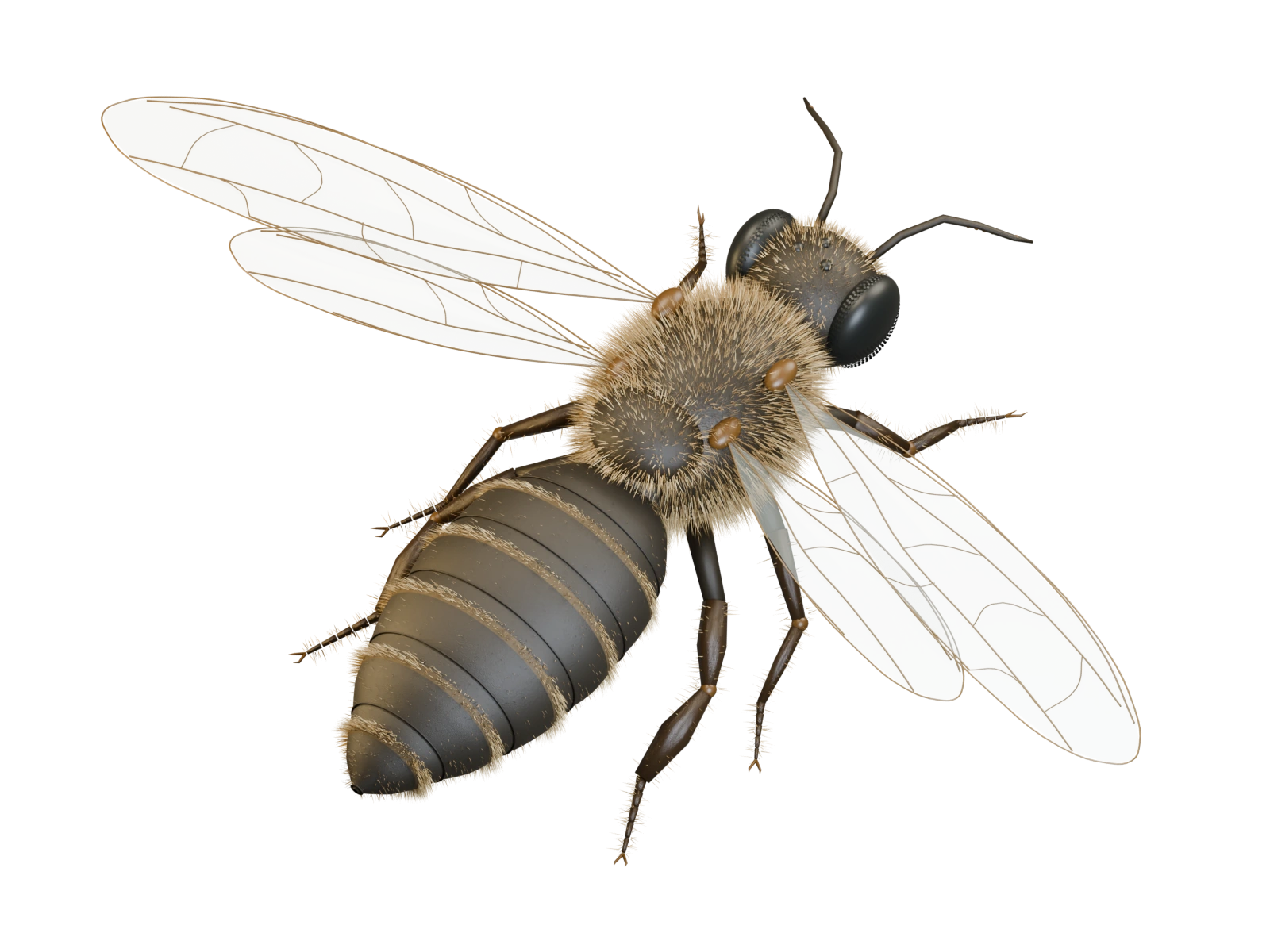 Dorsal overview
Whole bee
Three connected regions make a forager: a head that senses, a thorax that powers movement, and an abdomen that houses vital organs.
Follow the anatomy from sensing a flower to carrying pollen home.
APICULTURE / QUESTIONS THAT CONNECT
Varroa mites, Thai Sacbrood Virus, and the effects of pesticides on pollinators.
Pollen substitutes and feeding preferences in Indian honey bees.
Stingless bees in greenhouse cucumber, pollinator diversity in cotton, and visits to mango flowers.
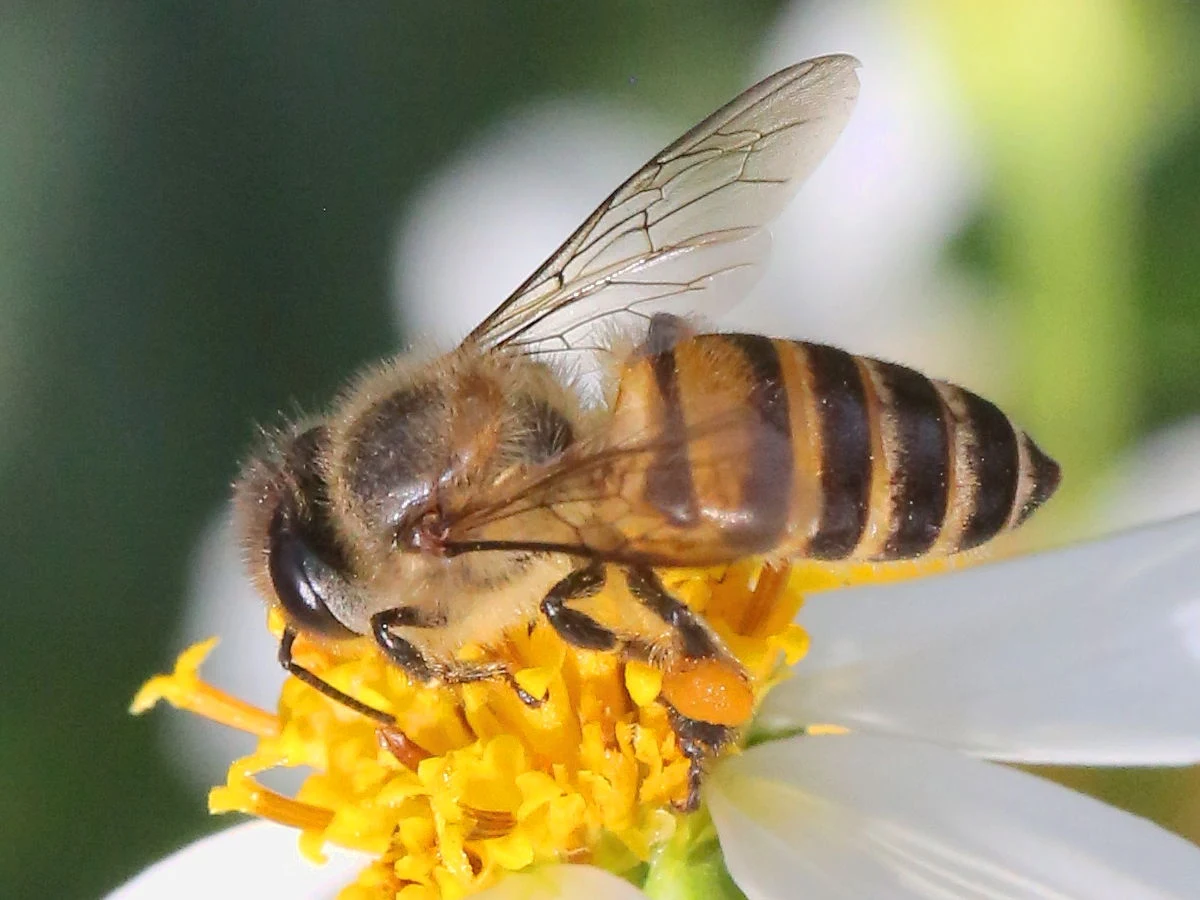
BEYOND THE HIVE
RESEARCH, MADE POSSIBLE
₹2.90crore
Combined stated budgets of four projects in the faculty CV.
AICRP on Honey Bees and Pollinators
ICAR / SINCE 2014–15Effect of Neonicotinoids on Pollinators
ICAR / SINCE 2017–18Centre of Excellence in Beekeeping / IBDC
National Bee Board / SINCE 2017–18Multiplication of Nucleus Stock of Honey Bees
National Bee Board / SINCE 2017–18Venture Capital on Bee Colonies
Funding not listed / SINCE 2013–14

05 / THE RESPONSIBILITY OF LEADERSHIP
Professor & Head of Agricultural Entomology at the Agricultural College and Research Institute, Killikulam.
13 March 2019 – 7 September 2021. Returned to TNAU, Coimbatore, in September 2021.
Read the complete career record06 / THE COLONY IS PEOPLE
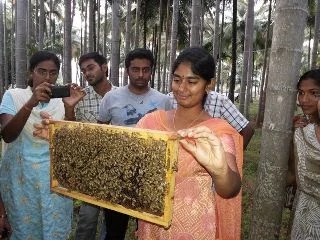
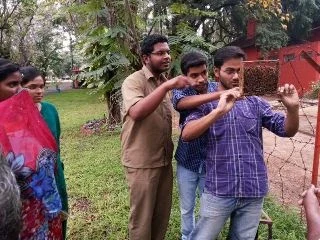
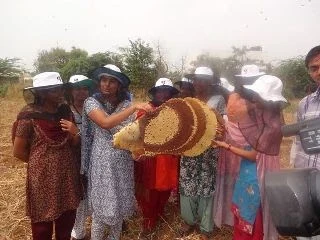
Monthly training programmes brought bee science to farmers and beekeepers. Teaching connected students with working colonies, while outreach extended to Burgur, Masinagudi, and Udumalai.
Guidance and training figures are those recorded in the faculty CV, not updated current totals.
One dot for every person.
A network of shared knowledge.
LEARNING BY DOING
Photographs from the original TNAU experiential learning archive.
FIELD NOTES / A PHOTOGRAPHIC COLLECTION
Look closer at bees, flowers, and the places where colonies take shape.
A field gallery of bees and their habitats. Photographs by the credited contributors; species and locations follow their source records.
07 / THE HIVE OF KNOWLEDGE
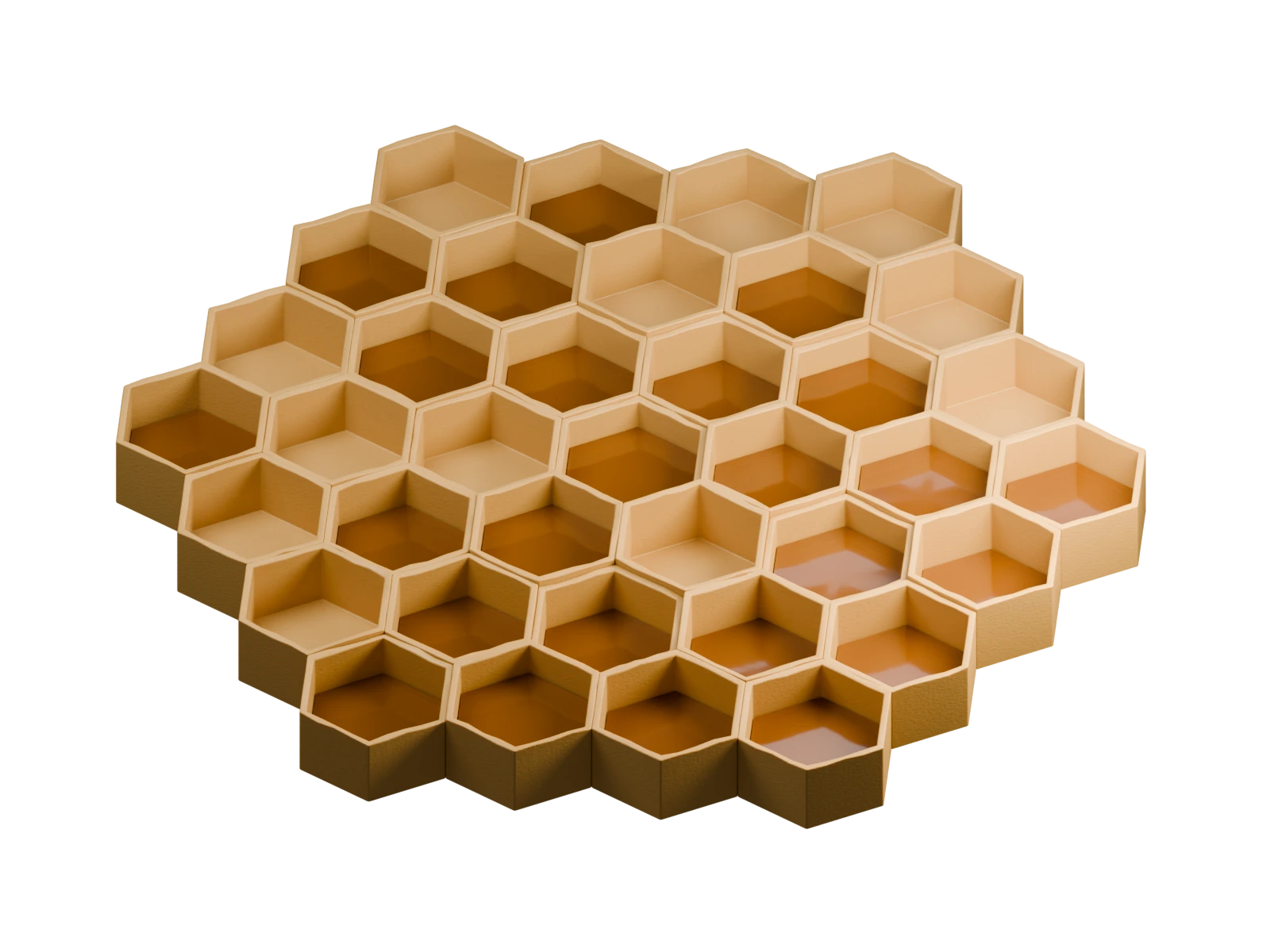
Explore 63 publications from the faculty CV. Each cell opens a citation; filters reveal the different strands of the research.
63 works listed in the faculty CV. Publication years and citations follow that record; this is a historical collection.
08 / KNOWLEDGE, OPEN TO YOU
Bee biology, colony management, pollination, honey, and health.
Student-authored guides, with every original document preserved.
Watch TNAU’s practical beekeeping videos within the archive.
FROM EXPERIMENT TO UNDERSTANDING
09 / KEEP THE CONVERSATION GROWING
Department of Agricultural Entomology
Centre for Plant Protection Studies
Tamil Nadu Agricultural University
Coimbatore 641003, Tamil Nadu, India